
Route 66 at 100
Celebrate the Centennial with Two Great Desert Hikes

Drive it. Then take a hike.
America’s numbered highway system turns 100 this year. So does its most famous road.
Route 66—the 2,200-mile ribbon of pavement stretching from Chicago to Santa Monica—helped define the American road trip and opened the modern route west to California. For generations it carried dreamers, families, soldiers, adventurers, and migrants toward opportunity, reinvention, and a better life.
Communities along the route are celebrating the centennial with festivals, exhibits, and special events. My suggestion is simpler.
Take a road trip. Pull off the highway. Go for a hike. Or two.
One of my favorite stretches of Route 66 lies in the Mojave Desert between Ludlow and Needles, California’s longest and best-preserved section of the historic road. Here the Mother Road passes through a landscape of volcanic fields, lonely mountain ranges, abandoned service stations, and immense desert silence.
I like to pull over, step out of my trusty 4Runner, and simply listen.
The quiet out here has weight. It presses against your ears. Looking across the barren desert, the distant mountain ranges, and the black volcanic terrain surrounding Amboy Crater, I am struck by how little this landscape has changed. The road arrived. Travelers came and went. Entire towns flourished and faded. Yet the desert remains.
Traveling past Amboy, Cadiz, Danby, Essex, and Fenner, the journey becomes more than a drive through history. It’s an opportunity to imagine the hopes and fears of those who once followed this road westward toward California.
Cruising past faded Burma-Shave signs and long-closed motor courts, you can almost hear the echoes of Okies in overloaded jalopies and GIs heading home. John Steinbeck captured the feeling in The Grapes of Wrath: “And 66 goes on over the terrible desert, where the distance shimmers and the black cinder mountains hang unbearably in the distance.”
Not exactly a tourism brochure for Amboy. But remarkably accurate.
Miles from nowhere—okay about 28 miles east of Ludlow—you notice extensive Hawaiian-like lava fields. Amboy Crater, the cause of this flow, lies just south of the road.
Amboy Crater
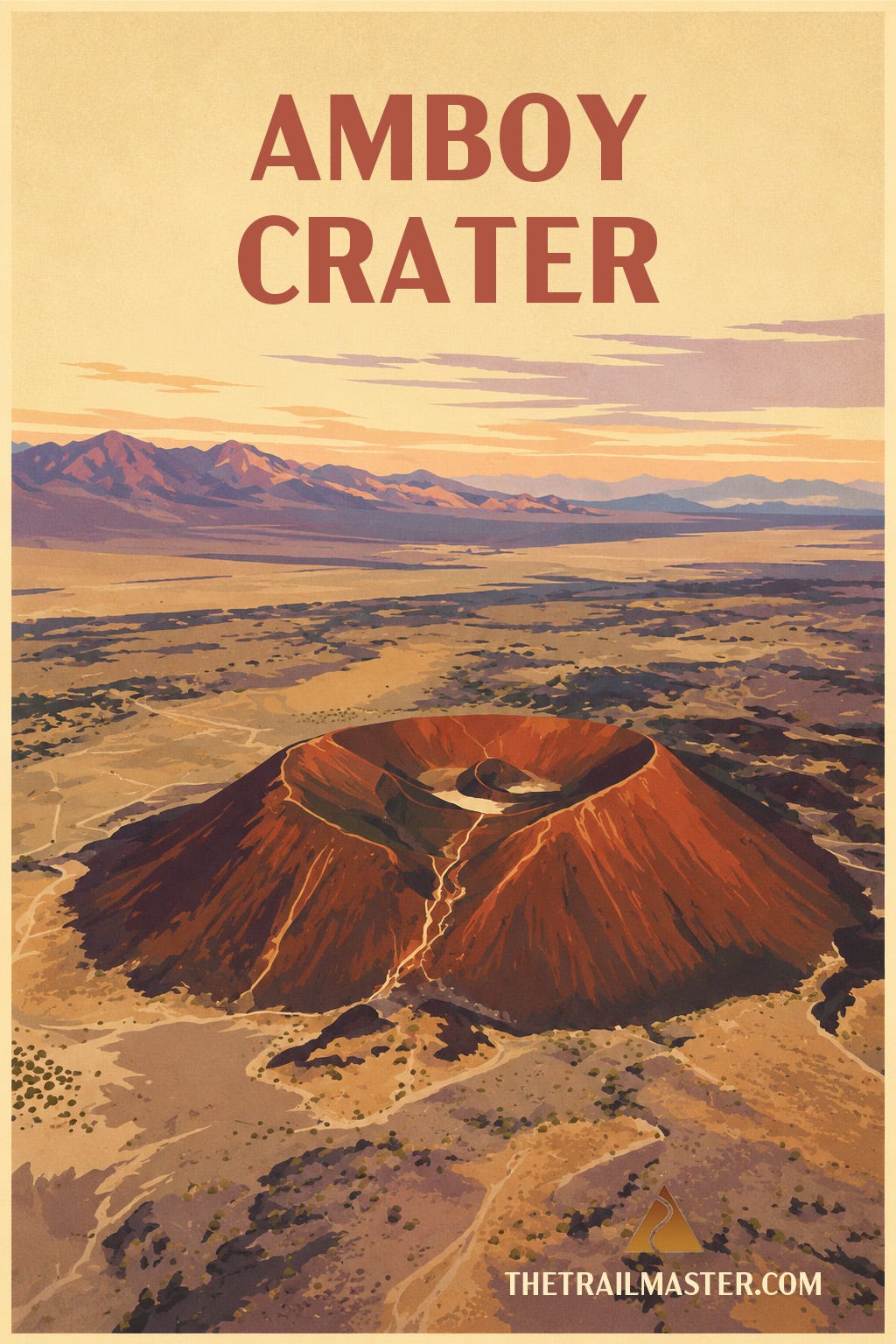
We’re fascinated by volcanoes, and—as long as they’re extinct, cool to the touch, and not spewing lava—we like to visit them. Amboy Crater, a perfectly pint-sized cinder cone out in the eastern Mojave Desert, has long been a curiosity for generations of travelers. It looms (well, rises modestly) just south of Route 66, flanked by a sea of black lava and a backdrop of roadside Americana: abandoned gas stations, weathered billboards, and the neon ghost of mid-century diners.
Amboy Crater was once a must-see stop, when motorists with sweaty palms and overheating Buicks pulled over to gawk at the little volcano. Its heyday ended in 1973, when Interstate 40 opened and siphoned traffic off the Mother Road. That same year, Amboy Crater and its lava field were designated a National Natural Landmark. The Bureau of Land Management, determined to save the crater from obscurity, has since installed restrooms, picnic tables, and even a crater-viewing platform—proof that even an extinct cinder cone can make a comeback.
Amboy Crater itself is young in geologic time. It erupted about 10,000 years ago (some geologists suggest an even more recent eruption), spewing basaltic lava across 24 square miles. The flows left behind a Hawaiian-style landscape with two flavors of rock: aa (pronounced ah-ah, the sound you make when stepping barefoot on it), and pahoehoe (pa-hoy-hoy), smoother, ropy, and easier on the boots.
So stretch your legs, channel your inner road warrior, and make the 3-mile round trip climb of Amboy Crater. The payoff isn’t just the panoramic view of lava fields and desert ranges—it’s the story of a volcano that managed to become a roadside celebrity.
Mojave National Preserve
The town of Amboy, a few miles east of the crater, adds to the lore. Once a bustling Route 66 stop, today it’s mostly remembered for Roy’s Motel & Café, its neon sign a beacon in the desert night. Gas, snacks, and a whiff of nostalgia are available here.
From Amboy, Kelbaker Road leads north into Mojave National Preserve, making Route 66 a natural gateway to more desert adventures. Figure about 60 miles or so of driving from Amboy to the Kelso Dunes.
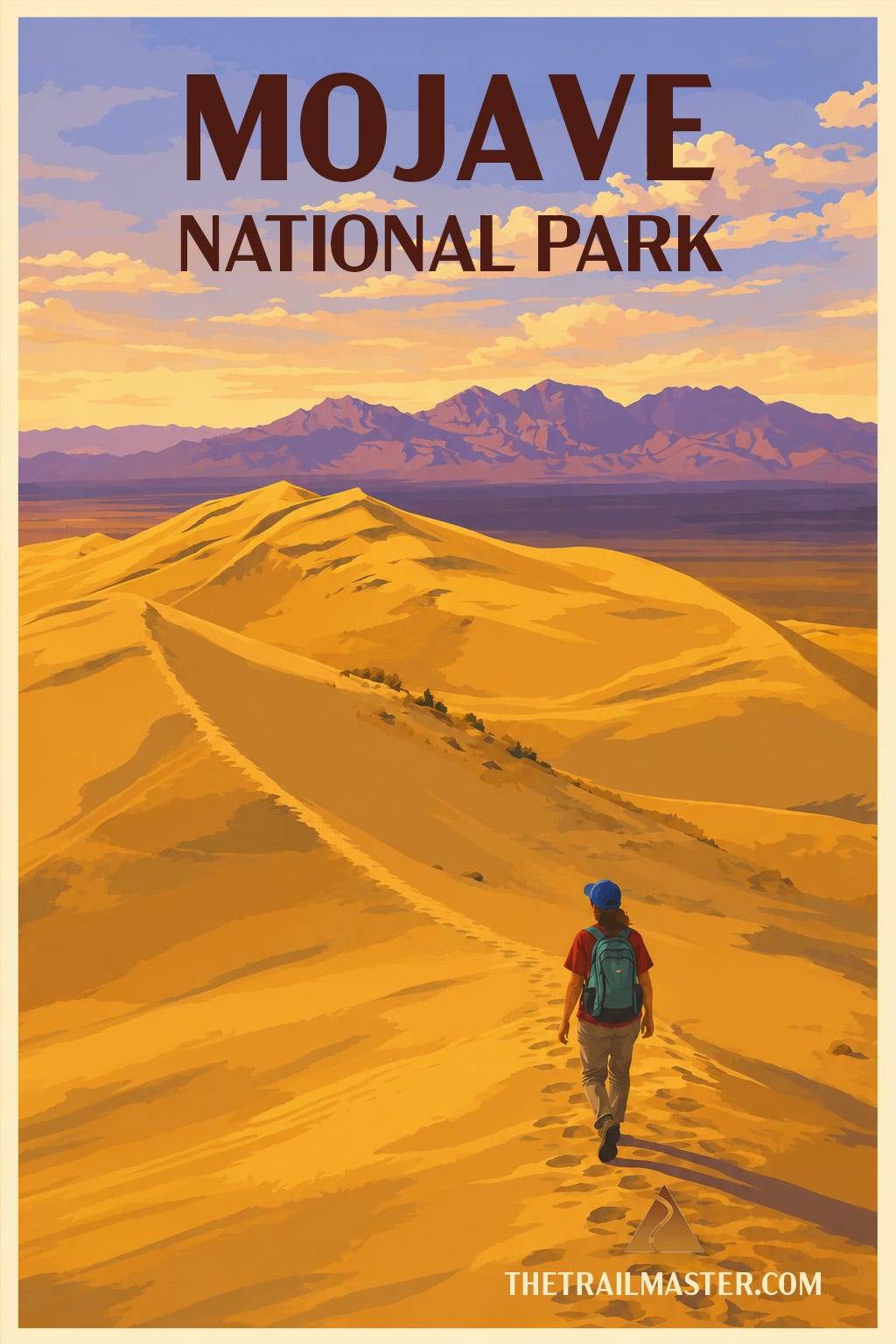
Kelso Dunes, one of the tallest dune systems in America, is a must-see sight, the preserve’s signature hike. The dunes are known to give off good vibrations.
That’s not just a Beach Boys lyric—it’s physics and desert magic. Kelso’s sands can sing, boom, rumble, or gong depending on the conditions. Slide your boots down a steep slope and you may unleash a low-frequency roar that sounds like a passing plane or a kettle drum echoing across the desert. Scientists say the sound comes from countless grains of sand vibrating in unison. Poets prefer to say the dunes have a voice. Either way, it’s unforgettable to hear the earth itself humming under your feet.
Hiking to the top of the nearly 600-foot-high dunes is an adventure in humility. Every step forward seems to slide half a step back, like a treadmill made of sand. Still, there’s fun in the futility: the higher you go, the more laughter echoes with your labored breathing. The reward? A summit panorama stretching across the Mojave: the rugged Kelso Mountains, the Bristol Range, the Providence Range, and far-off Granite peaks.
And the descent! The uphill grind pays off with a childlike joy on the way down. Pick a steep slope and plunge—gravity is finally on your side. You’ll bound, slide, leap, and whoop your way to the bottom, with the sands booming a bassline to your celebration.
The singing dunes and Amboy Crater are very different hikes. One leads to the rim of a young volcano. The other climbs a mountain of moving sand. Yet both reveal something essential about the Mojave Desert: this is not an empty place. It is a landscape filled with wonder for those willing to leave the pavement behind.
That may be the best way to celebrate Route 66 at 100.
Drive the Mother Road. Stop at Roy’s. Admire the fading neon. Think about the generations who passed this way chasing opportunity and adventure.
Then lace up your boots.
Because some of the best stories along Route 66 begin when you step away from the highway.
Hike On,
John McKinney
The Trailmaster
“Every trail tells a story.”
From the Trailmaster Library
If you’d like to explore more California trails:
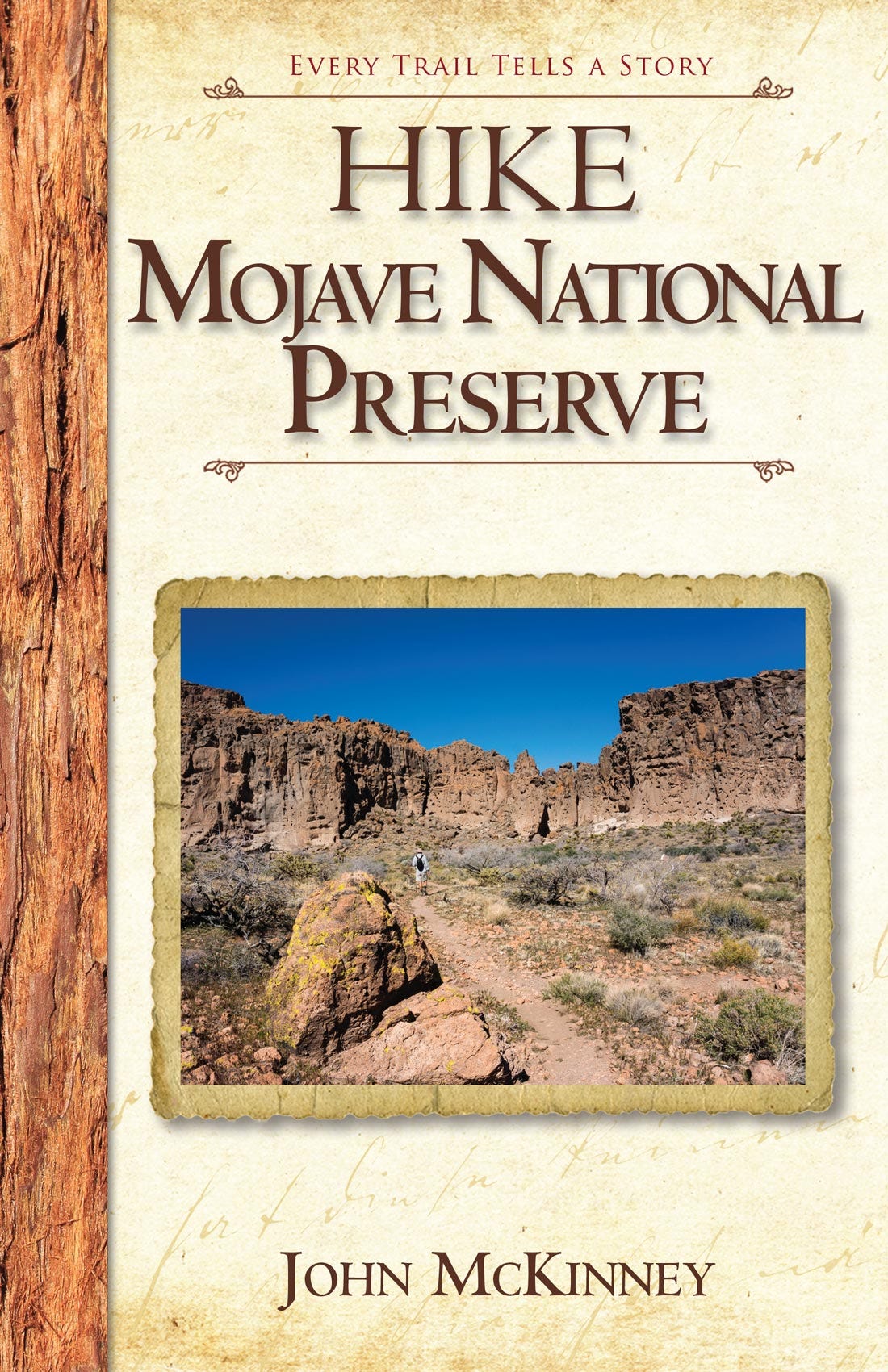
Climb a cinder cone, squeeze through a lava tube, and hide out in Hole-in-the-Wall and Banshee Canyon. Explore Zzyzx and Soda Springs, walk-about historic Kelso Depot, wander the vast and “musical” Kelso Dunes. Plus hikes just outside the park in Afton Canyon, Mitchell Caverns, and Amboy Crater off old Route 66. Complete with colorful stories, trusted trail accounts, and easy-to-follow maps. Every Trail Tells a Story. Hike On!
TheTrailmaster.com
YouTube | Instagram | Store
If this newsletter was forwarded to you, subscribe here.